







Make the first year of parenting a little easier.

First it's just milk, diapers and naps. Then come solids, allergens and iron-rich foods. Newbie Parents remembers it all, tells you roughly when the next nap is due, and keeps track of every food your baby has tried.

Download on the App StoreGet it on Google Play

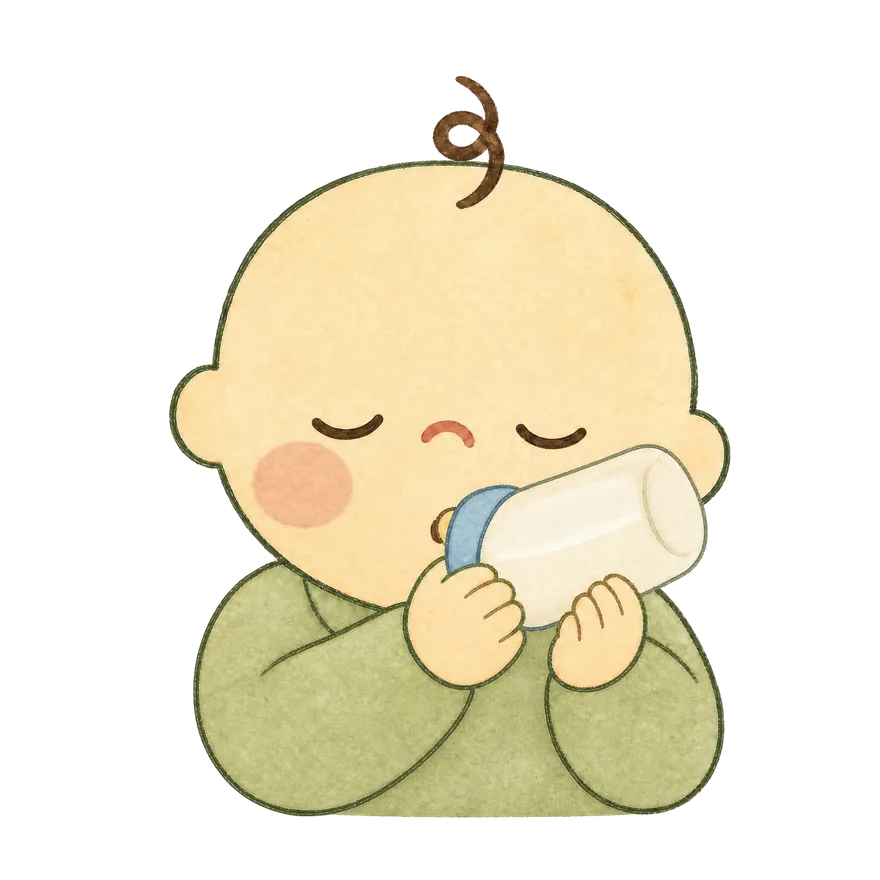
Animation: a baby drinks milk, yawns and rubs their eyes before a nap, tries solids, and falls asleep at bedtime. Newbie Parents logs each moment for the whole family and says when it's time to wind down for the nap.

Know roughly when the next nap is coming.

Is there time for a shower before the next nap? Newbie Parents does the counting: a rough time for the next nap and bedtime, from your baby's age and the naps you log. Your baby's own sleepy cues still come first.

  • When to start winding down
  • Gets closer to your baby's rhythm the more naps you log
  • Tap an estimate to see how it was worked out

Then solids start, and the questions change.

What can your baby eat, and how do you prepare it? The food guide covers more than 180 foods, from avocado and egg to Singapore favourites like kai lan (Chinese broccoli) and congee (rice porridge).

Tap beef, carrot or strawberry to open its page.

Proteins

Beef

Nutrition
Protein, iron and zinc. Iron helps the body make red blood cells that carry oxygen.
Preparation
Cook thoroughly. Remove bones, skin and excess fat, then mince, shred or cut into thin strips.

Vegetables

Carrot

Nutrition
Vitamin A and fibre. Vitamin A supports normal vision and the immune system.
Preparation
Cook until soft, then mash or finely chop to a texture your baby can manage.

Fruits

Strawberry

Nutrition
Vitamin C helps the body absorb iron from plant foods.
Preparation
Mash soft berries, or cut larger berries into quarters.

Missing a food your family eats? Tell us and we'll add it.

Has your baby had egg yet? The app remembers.

Egg, peanut, cow's milk: it's hard to remember what's been offered, and when. The app tracks the nine common allergen groups: which are tried, when each was last offered, and any reactions. If a meal was a baby cereal or a yoghurt, the allergens on its label count too.

First introduced 2 Oct 2026

Cow's Milk

Last given 6h 44m ago.

Cow's-milk protein is present in standard cow's-milk-based formula and dairy foods such as yogurt, cheese and butter. Infant formula can remain a main milk source before 12m; plain full-cream cow's milk as a drink should wait until 12m.

9× given

  • Cheese27 Oct 2026
  • Cottage Cheese25 Oct 2026

Examples to try

  1. Yogurt (plain, full-fat)
  2. Butter in cooking
  3. Soft cheese (ricotta)

Aim to give at least once a week to maintain tolerance.

First introduced 4 Oct 2026

Egg

Last given 17h 48m ago.

Introduce well-cooked egg from around 6 months. Early introduction, followed by regular consumption, can help prevent egg allergy.

7× given

  • Steamed Egg26 Oct 2026
  • Egg24 Oct 2026

Examples to try

  1. Hard-boiled egg (mashed)
  2. Scrambled egg
  3. Egg in congee

Aim to give at least once a week to maintain tolerance.

First introduced 7 Oct 2026

Peanut

Last given 18 days ago. Aim to offer each introduced allergen regularly, about once a week, to help maintain tolerance.

Source: ASCIA(opens in a new tab)

Introduce smooth peanut (as thinned peanut butter, never whole nuts) from around 6 months. Early introduction, followed by regular consumption, can help prevent peanut allergy.

2× given

  • Smooth Peanut Butter9 Oct 2026
  • Smooth Peanut Butter7 Oct 2026

Examples to try

  1. Peanut butter (thinned with water)
  2. Peanut powder in porridge
  3. Groundnut soup (strained)

Aim to give at least once a week to maintain tolerance.

Tree Nuts

Not tried

Introduce one tree nut at a time. Always serve thinned to a paste, never whole nuts or chunks, which are a choking hazard.

Examples to try

  1. Almond butter (thinned)
  2. Cashew butter (thinned)
  3. Walnut paste

Aim to give at least once a week to maintain tolerance.

First introduced 15 Oct 2026

Wheat

Last given 1 day ago.

Related to gluten sensitivity in some children. Introduce soft, well-cooked forms first. Distinct from celiac disease.

6× given

  • Gerber Organic Oatmeal Cerealcontains Wheat26 Oct 2026
  • Wholemeal Bread24 Oct 2026

Examples to try

  1. Wholemeal bread (soft)
  2. Well-cooked pasta
  3. Cream of wheat porridge

Aim to give at least once a week to maintain tolerance.

First introduced 11 Oct 2026

Soy

Last given 9 days ago. Aim to offer each introduced allergen regularly, about once a week, to help maintain tolerance.

Source: ASCIA(opens in a new tab)

Soy allergy often co-occurs with cow's milk allergy. Start with soft silken tofu, the easiest form for early introduction.

2× given

  • Silken Tofu18 Oct 2026
  • Silken Tofu11 Oct 2026

Examples to try

  1. Silken tofu (steamed)
  2. Firm tofu (tau kwa)
  3. Edamame (mashed)

Aim to give at least once a week to maintain tolerance.

First introduced 13 Oct 2026

Finned Fish

Last given 4 days ago.

A recognised allergen in Singapore, less common than shellfish or egg, but worth introducing carefully. Start with mild, low-mercury fish. Always check for bones before serving.

3× given

  • Salmon23 Oct 2026
  • Threadfin18 Oct 2026

Examples to try

  1. Threadfin / Ikan Kurau (steamed)
  2. Pomfret (steamed, deboned)
  3. Salmon (poached)

Aim to give at least once a week to maintain tolerance.

Shellfish

Not tried

A common food allergen in Asia. Introduce one type at a time. Watch closely for any reaction after a first exposure.

Examples to try

  1. Prawn (minced fine)
  2. Crab meat (flaked)
  3. Shrimp in congee

Aim to give at least once a week to maintain tolerance.

Sesame

Not tried

The 9th official allergen, easy to overlook! Found in many Asian sauces and dishes. Always thin tahini well before serving.

Examples to try

  1. Tahini (thinned with water)
  2. Sesame oil (small drop in food)
  3. Sesame powder in porridge

Aim to give at least once a week to maintain tolerance.
Forgot to log a feed, or a whole day? That's fine.

Log what helps and skip the rest. On the busiest days, even the dad who built it only logs naps. You decide what works for the family.

Log it once, and everyone who helps can see it.

When did she last feed? Did anyone change him after lunch? Log a feed, a diaper or a nap in a couple of taps, and everyone who helps sees it on their own phone.

Guidance you can check.

Family, friends and the internet don't always agree. So every tip names its source and links to it: first Singapore's official health site, HealthHub, and KK Women's and Children's Hospital, then bodies like the World Health Organization. It keeps track; it doesn't diagnose.

The details you'll be asked about, already written down.

When did the fever start? What medicine was given, and when? Log temperatures, symptoms and medicines as they happen, and check the log instead of trying to remember. The app doesn't diagnose or work out doses. For health worries, speak to your doctor.

  • Fever warning signs from a named source
  • Health records are kept only if you say yes

Logging a fever for Timothy: a temperature of 38.4°C taken in the ear, with when to get urgent help above it; then Paracetamol 120 mg/5 mL, a dose of 5 mL, noted as for fever. Home then shows both under Recent moments.

Every jab on the schedule, visit by visit.

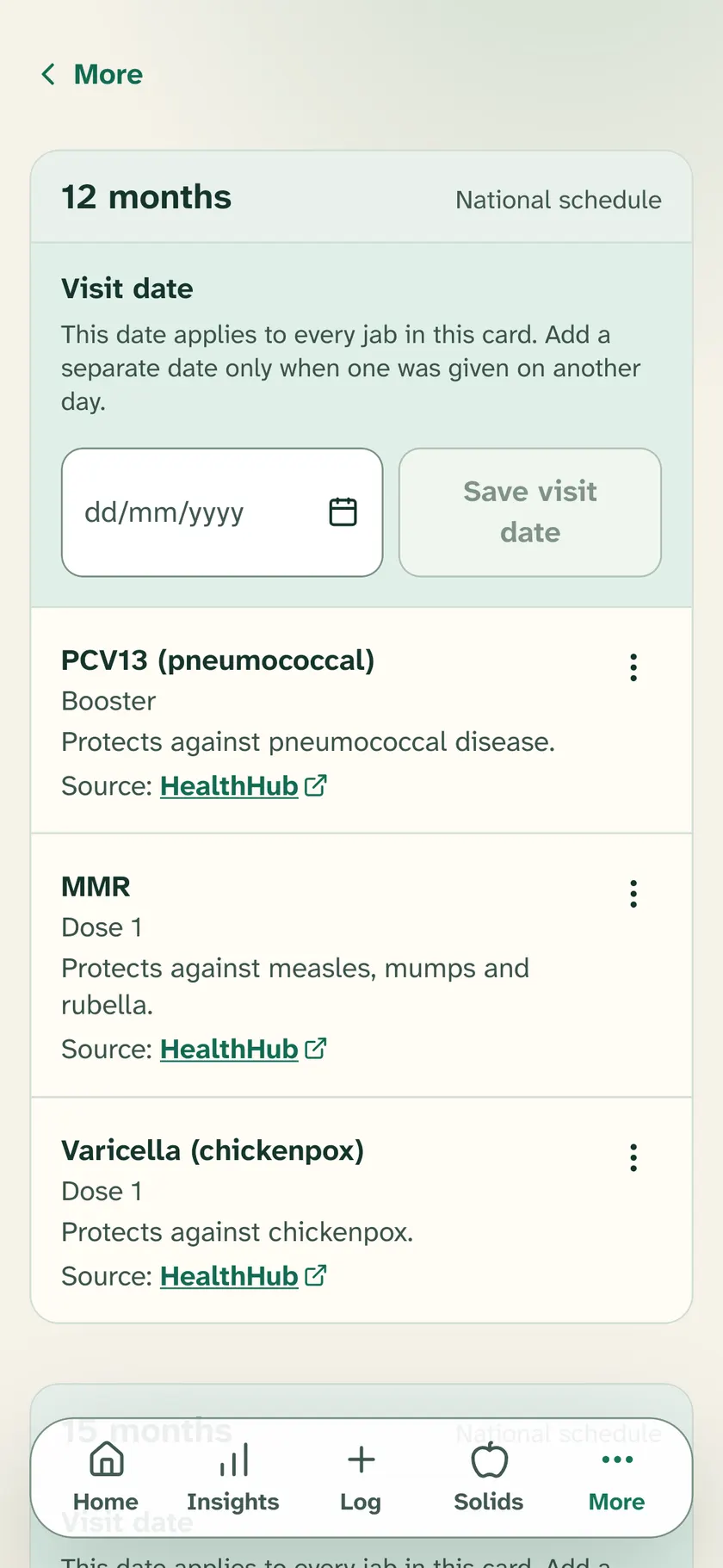
Which vaccinations are due at the next clinic visit, and which are done? The app lays out Singapore's childhood vaccination schedule visit by visit, with each vaccine's source on HealthHub. Add the date from your baby's health booklet, and it keeps count of every dose.

  • Clinic split a visit, or chose extra vaccines? Move or add jabs to match the booklet
  • The new-parent paperwork in order: registering the birth, the Baby Bonus (the government's support for new parents) and leave, each linked to the official page

Only families in Singapore see this part of the app.

Vaccinations for Timothy, the Singapore childhood schedule: 15 of 23 doses added. At the 6-month visit, dated 21 September 2026: DTaP, dose 3, which protects against diphtheria, tetanus and whooping cough. At the 12-month visit, still to come: MMR, dose 1, which protects against measles, mumps and rubella. Then the Parent Guide: papers and registration, 3 of 3 done, from keeping the hospital documents to the digital birth certificate.

On the App Store and Google Play now.

Download on the App StoreGet it on Google PlaySee all features
The Straits Times, 16 May 2026, headline: No coding skills, no problem: New dad builds baby tracker with AI tool. Above it, a photo of Frank, his wife and their baby son at home with the tracker open on a laptop.Read the article on The Straits Times (opens in a new tab)
The Straits Times, 16 May 2026 · Photo: Shintaro Tay

Built by a dad in Singapore, for his own family first.

It started as a simple tracker Frank made for himself and his wife in their son's first months. When their son started solids, Frank added a food guide and an allergen tracker. Now their son is one. After a year of night feeds, first foods and planning days around naps, Frank hopes the app makes the first year a little lighter for other families.

Questions parents ask

Is it free?

You get the whole app free for 3 weeks from your first log, with no card needed. After that, it's a paid subscription that covers your whole family: every caregiver, every device. Your records are always yours: if you stop paying, you can still see and download them for 12 months. You'll see the prices in the app before you choose a plan.

Which phones will it work on?

Newbie Parents is on the App Store for iPhone and on Google Play for Android phones.

Can my partner, helper or parents use it too?

Yes. Invite your partner to share the full record. A helper or grandparent can be given access to just today's routine and the care notes you write for them.

Is this medical advice?

No. Newbie Parents keeps records and links to guidance from named sources. It doesn't diagnose or give medical advice. If you're worried about your baby's health, speak to a doctor. For a life-threatening emergency, call your local emergency number.

Is my family's information safe?

In the app, only the people you invite can see your family's records. They're stored with our database provider, Convex, and encrypted when sent and when stored. We don't sell personal data or use it for advertising, and you can delete your account and its data at any time. The privacy policy explains your rights wherever you live.

More answers on the Help page.

Tap the baby

Your first 3 weeks are free, with no card needed.

Your free weeks begin when you log your first feed, nap or diaper. If the app helps, choose a plan that covers the whole family. If it doesn't, you can still view and download your records for 12 months.

Download on the App StoreGet it on Google Play